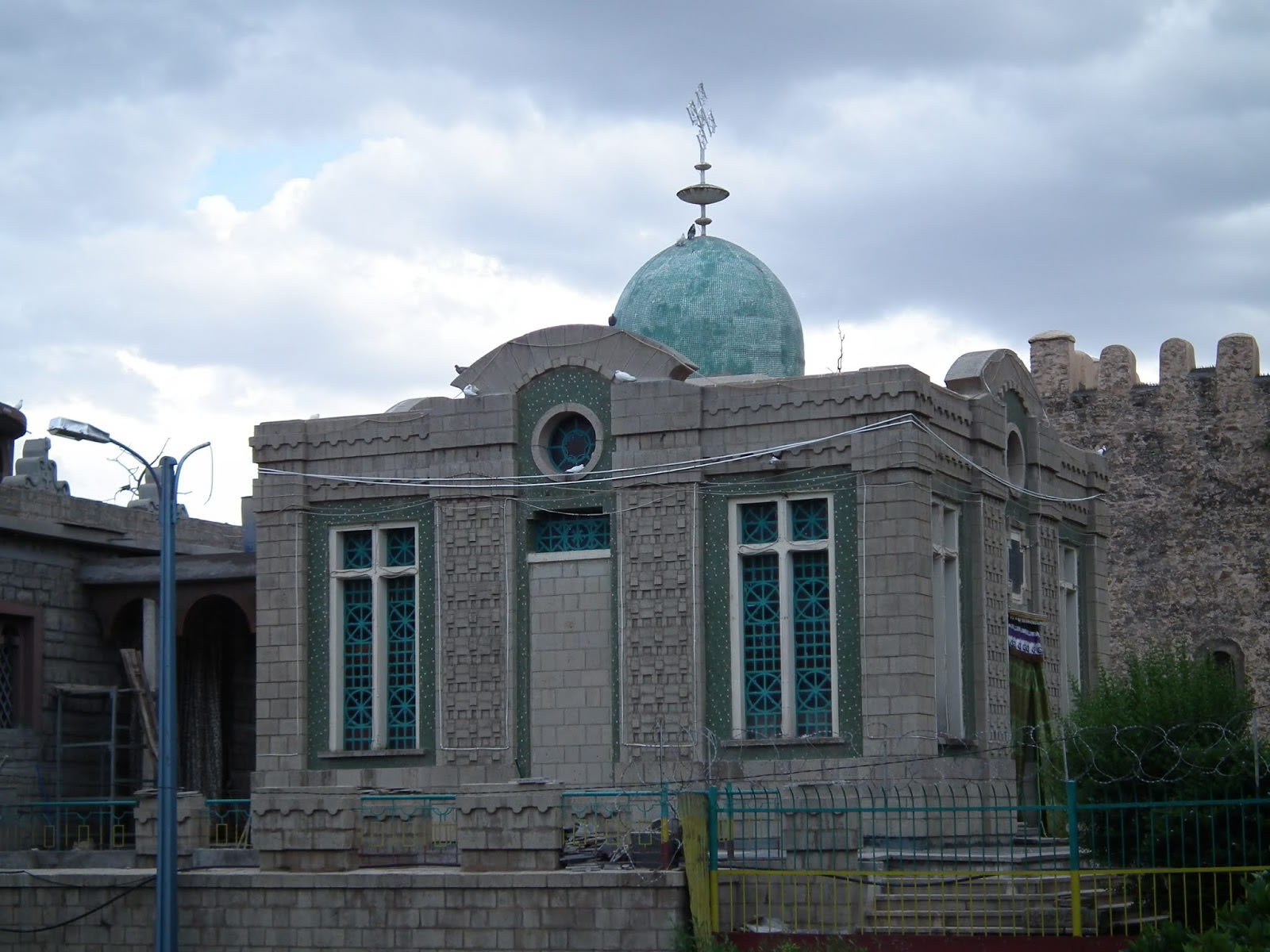
Axum, also called Aksum, is a city in Ethiopia. The city is the site of the ancient capital of the Aksumite Empire and the archaeological sites from that time are a UNESCO World Heritage site. Travelers visit several Christian churches, including the Church of Our Lady Mary of Zion which is said to house the Ark of the Covenant, mysterious monolithic stone monuments, and tombs of ancient kings. The archaeological museum in Axum contains the Ezana Stone, a stone carving that tells the story of King Ezana’s conversion to Christianity around 350 C.E. Like the Rosetta Stone, the Ezana Stone contains the same story in Greek as well as other languages which allowed researchers to unlock the secrets of ancient languages.
The ruins of the ancient city of Aksum are found close to Ethiopia's northern border. They mark the location of the heart of ancient Ethiopia, when the Kingdom of Aksum was the most powerful state between the Eastern Roman Empire and Persia. The massive ruins, dating from between the 1st and the 13th century A.D., include monolithic obelisks, giant stelae, royal tombs and the ruins of ancient castles. Long after its political decline in the 10th century, Ethiopian emperors continued to be crowned in Aksum.
Prev
Next
Axum
A lesson in History
Aksum symbolizes the wealth and importance of the civilization of the ancient Aksumite kingdom, which lasted from the 1st to the 8th centuries AD. The kingdom was at the crossroads of the three continents: Africa, Arabia and the Greco-Roman World, and was the most powerful state between the Eastern Roman Empire and Persia. In command of the ivory trade with Sudan, its fleets controlled the Red Sea trade through the port of Adulis and the inland routes of north eastern Africa. The ruins of the ancient Aksumite Civilization covered a wide area in the Tigray Plateau. The most impressive monuments are the monolithic obelisks, royal tombs and the palace ruins dating to the 6th and 7th centuries AD.
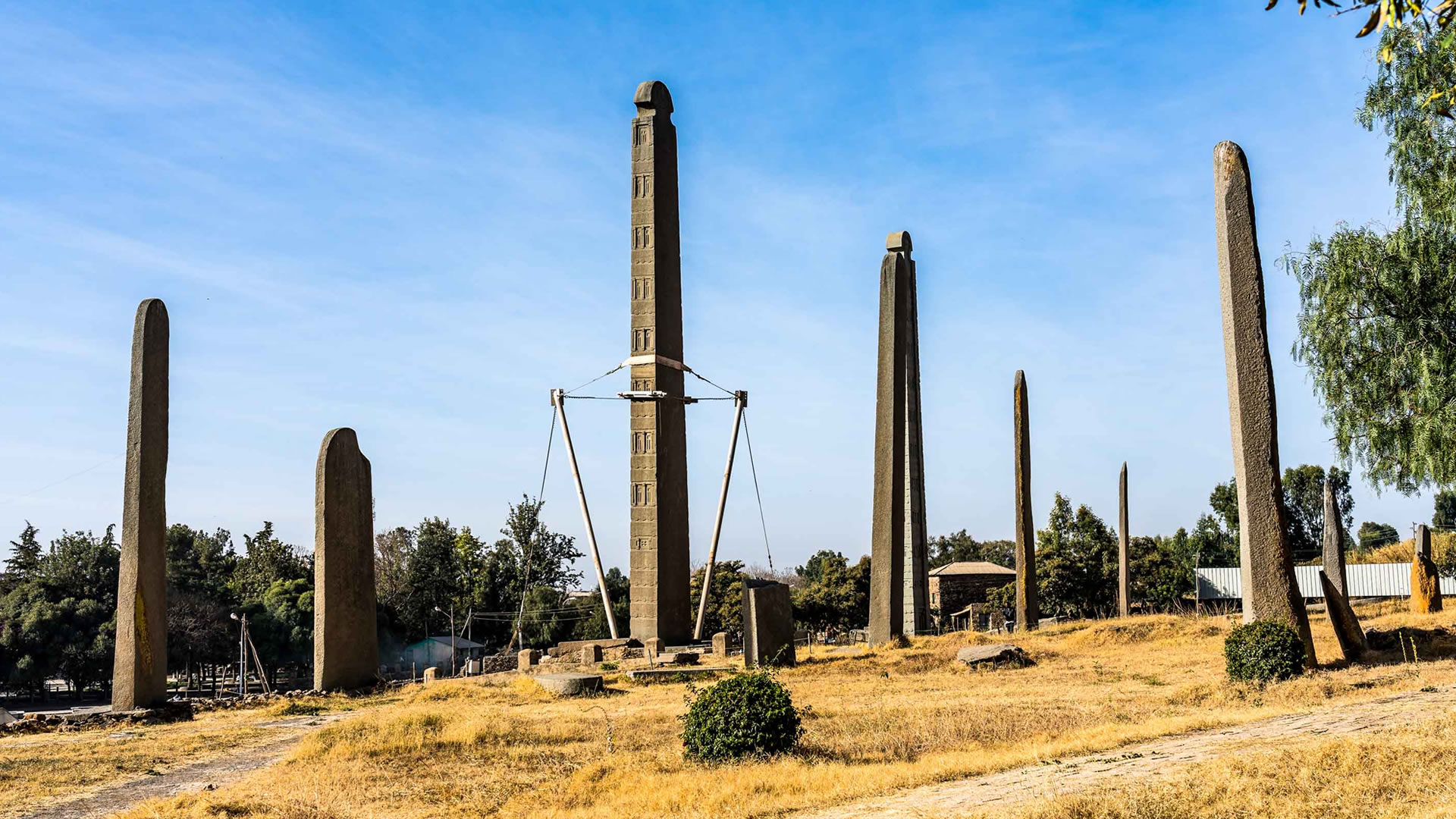
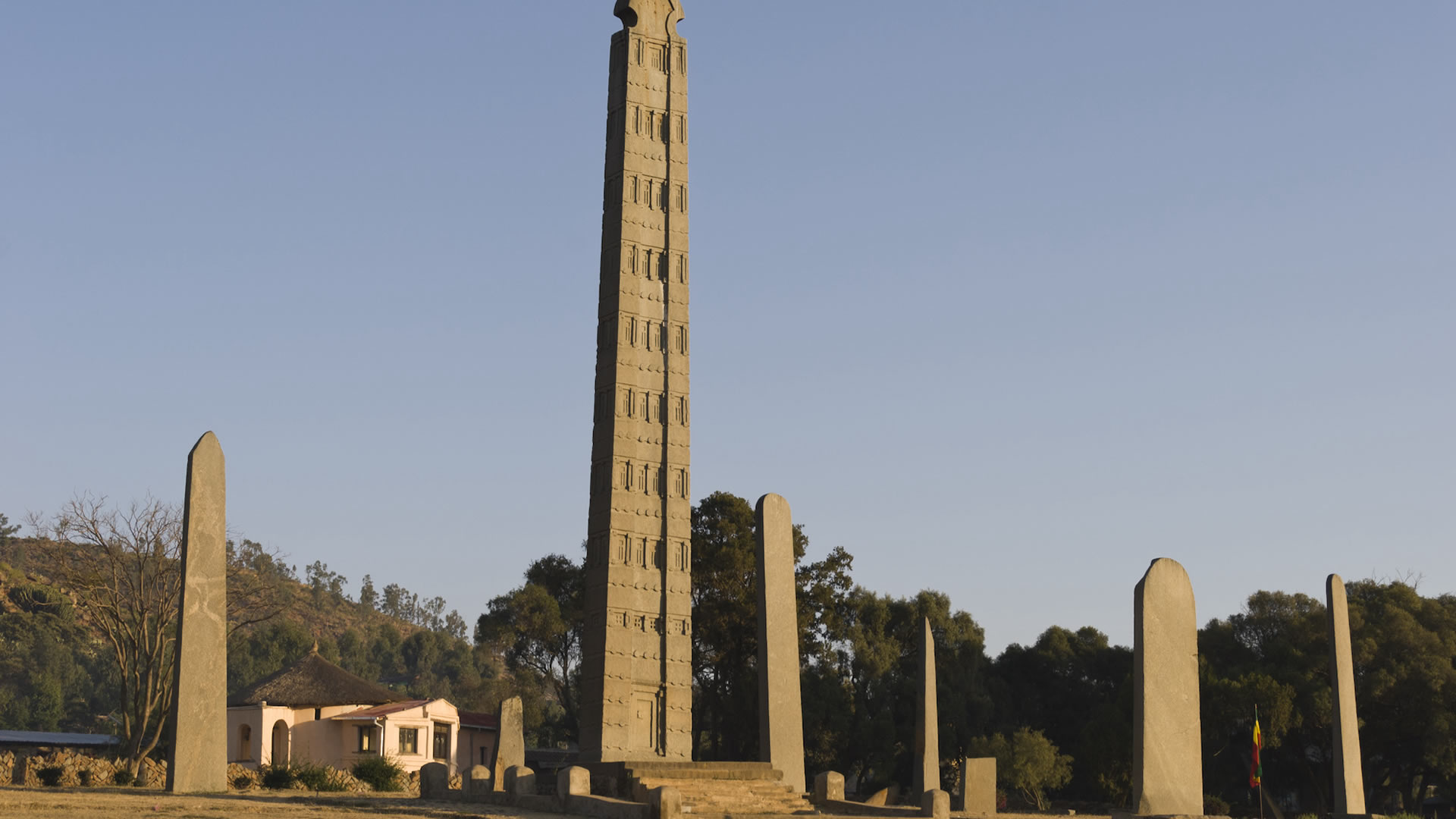
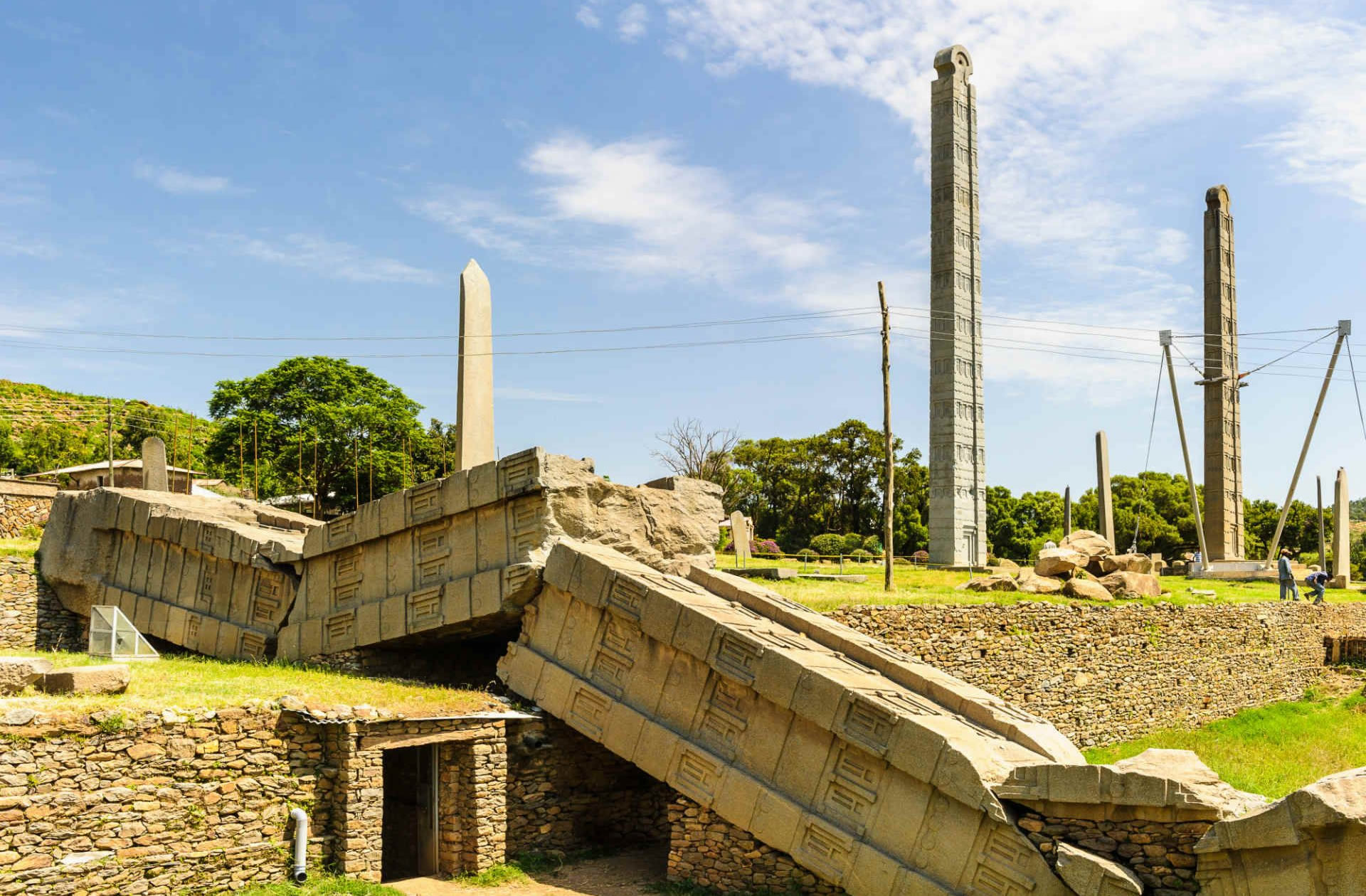
Several stelae survive in the town of Aksum dating between the 3rd and 4th centuries AD. The largest standing obelisk rises to a height of over 23 meters and is exquisitely carved to represent a nine-storey building of the Aksumites. It stands at the entrance of the main stelae area. The largest obelisk of some 33 meters long lies where it fell, perhaps during the process of erection. It is possibly the largest monolithic stele that ancient human beings ever attempted to erect.
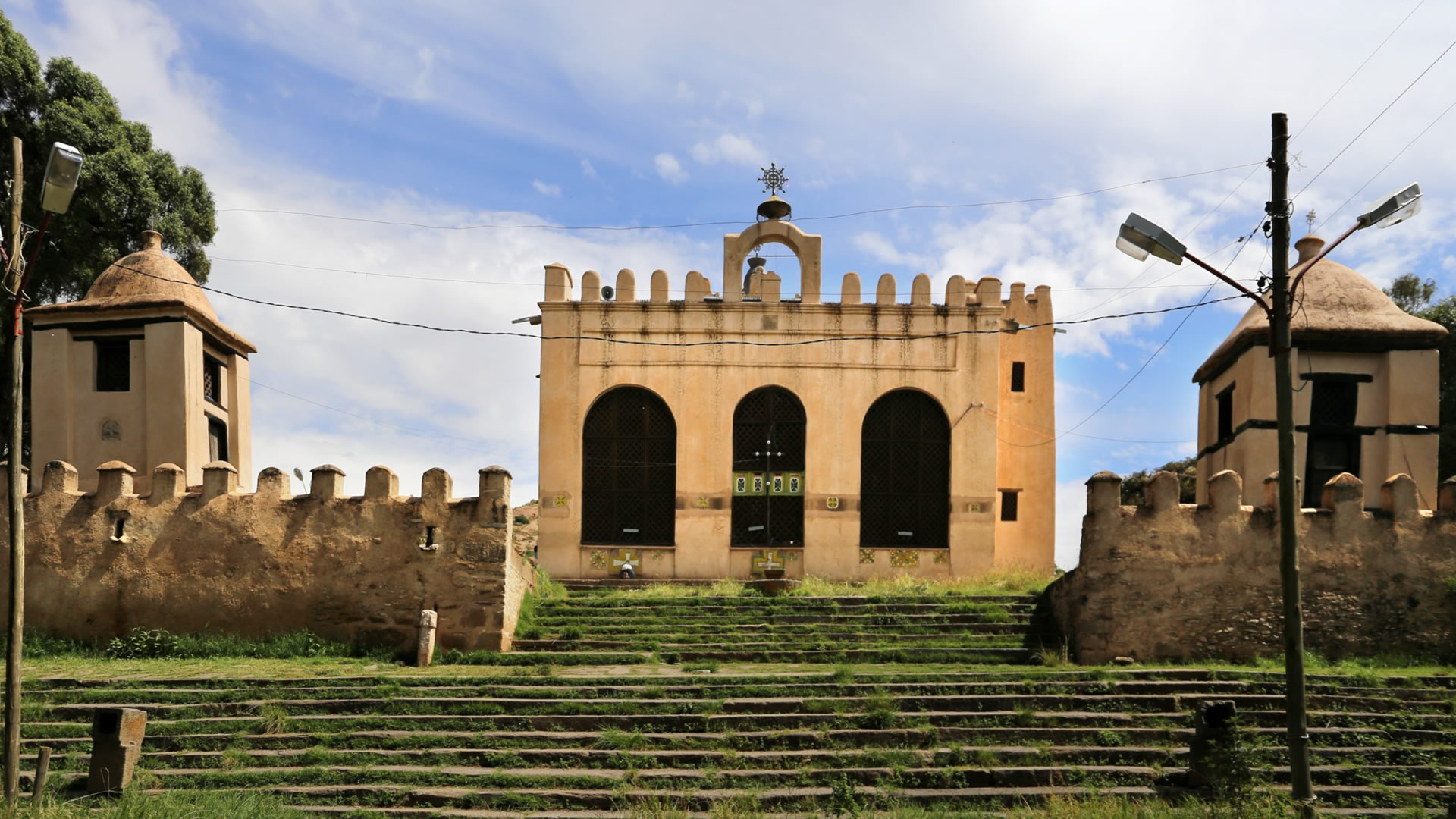
A series of inscription on stone tablets have proved to be of immense importance to historians of the ancient world. Some of them include trilingual text in Greek, Sabaean and Ge'ez (Classical Ethiopian), inscribed by King Ezana in the 4th century AD. The introduction of Christianity in the 4th century AD resulted in the building of churches, such as Saint Mary of Zion, rebuilt in the Gondarian period, in the 17th century AD, which is believed to hold the Ark of the Covenant.
Locate the Axum
The Experience
The main features of interest in Axum are the colossal rock stelae, the stone work of royal tombs and the legendary bath of the Queen of Sheba. The 16th century Church of St. Mary stands on the ruins of an earlier 4th century church. It is the country’s oldest and holiest Christian shrine. Most importantly, Ethiopian Christians believe it the resting place of the original Ark of the Covenant – one of the most precious relics of Judeo-Christian tradition. The town’s rich history was recognised in by UNESCO in 1980, when Axum was added to its list of World Heritage Sites. In 2006 the Axum University was founded, a vital movement towards modern development for the area.
As the home to the Queen of Sheba and (as the story goes) the Ark of the Covenant – the storied artefact of Moses’ 10 commandments – Axum is one of the oldest continuously inhabited cities in northern African, dating back to 400 BC. A quick trip to the north of the city reveals the Stelae field of various monuments that were carved and erected in the 4th century, known as the Obelisks of Axum. The proud pillars, each over 1,700 years old, 24 meters tall, made of solid granite and some weighing over 160 tons, are impressive sights to behold. In the same area, researchers have uncovered a number of tombs in Axum since the 1970s, but sadly many had been plundered by tomb raiders and only one such grave, The Tomb of the False Door, is now open to visitors.
Do not miss the Church of Saint Mary of Zion. Locals will tell you it is one of the most sacred of places in the whole of Ethiopia, not only does it house the Ark of the Covenant, but also has a long history dating back some 1,700 years. This World Heritage site is often referred to as “Abyssinia” in medieval texts and is considered the heart of ancient Ethiopia. It is a marvel of obelisks, ruins of castles, undiscovered tombs, beautiful churches and other cultural treasures spanning several centuries and embracing different religions.
Why Travel with Grand Africa Experiences
“Our guiding principles as Grand Africa Experiences is to work with each client, family and group in an individual way. We encourage you to work with us, discussing your interests, style of travel, budget, time frame and any other factors that would influence your trip – to come up with an itinerary best suited to you, your family or group. We always strive to offer the best value for your money.”
Responsible TravelWildlife Conservation and Community Support efforts
Custom TravelCustom itineraries designed to suit your travel preferences
Great SavingsBest bargains from local suppliers while maintaining quality service!
24Hrs Response TimeOur safari experts respond to all your requests within 24 hours